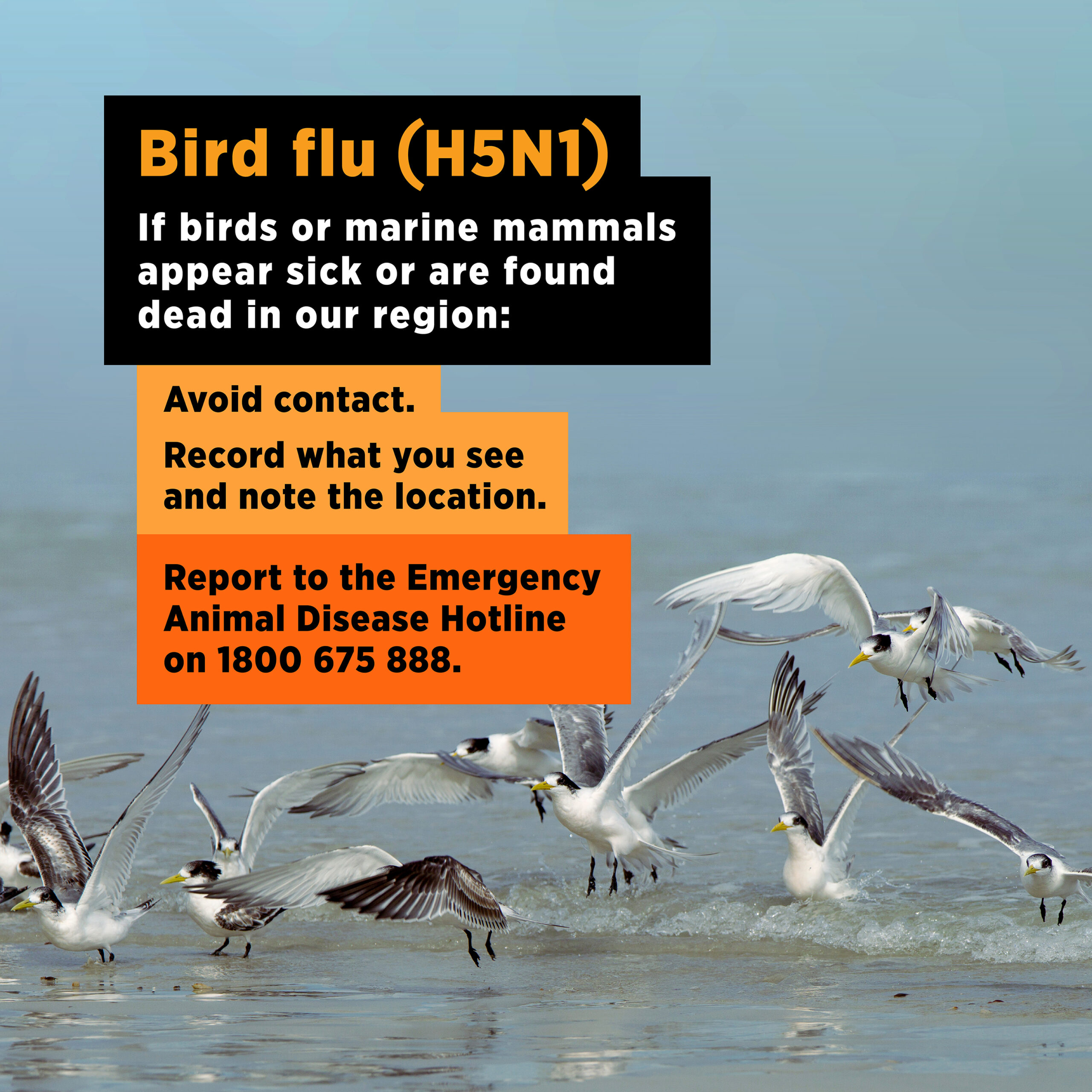
H5N1 Bird flu has been confirmed in a
small number of wild birds in NSW, including a greater crested tern at
Narooma. For Vincentia and the Jervis Bay region, with extensive coastal and
natural habitat, it’s a real possibility that bird flu will be detected locally. Public reporting is a critical part of the response and supports early detection efforts. Across Vincentia and our coastal region, beach and bush walkers, and water-craft users often notice birds and marine wildlife more closely than most—so it’s worth keeping an eye out for signs of illness. • Sudden death • Lethargy or reluctance to walk, eat or drink • Droopy appearance or ruffled feathers • Neurological signs (tremors, poor coordination, unusual
postures, inability to stand) • Respiratory signs (panting, nasal discharge, coughing or
sneezing). • Sick or dead seabirds or wild birds • Sick or dead backyard poultry or pet birds • High-risk species: penguins, pelicans, birds of prey,
black swans • Sick or dead marine mammals (seals, sea lions, dolphins). • AVOID contact—don’t touch the animal or the surrounding
area. • RECORD what you see—note the location; photos or video
help assessment. • REPORT it—use the online form (https://forms.bfs.dpi.nsw.gov.au/forms/23970)
or call the Emergency Animal Disease Hotline on 1800 675 888. • Injured birds should go to WIRES on 1300 094 737, not the disease hotline. More information about what to look for and how to report
can be found here: https://www.dpird.nsw.gov.au/dpi/biosecurity/animal-biosecurity/avian-influenza #VincentiaCommunityForum #Vincentia #Shoalhaven #JervisBay
#ProtectOurWildlife #H5BirdFlu |
sectetur adipiscing elit. Ut elit tellus, luctus nec ullamcorper mattis, pulvinar dapibus leo.
